



Introduction:
As the digital world evolves at breakneck speed, businesses are racing to adapt their marketing strategies to stay competitive and relevant. The digital marketing landscape in 2025 is marked by the convergence of artificial intelligence (AI), tighter data privacy laws, a shift toward hyper-personalization, and the explosive growth of short-form video and influencer marketing. With global ad spend on digital channels expected to cross $720 billion this year, marketers are under pressure to innovate, adapt, and deliver measurable value.
This article explores the most impactful trends shaping digital marketing in 2025 and how brands are responding to the ever-changing behavior of tech-savvy consumers.
AI-Powered Marketing: From Buzzword to Business Backbone
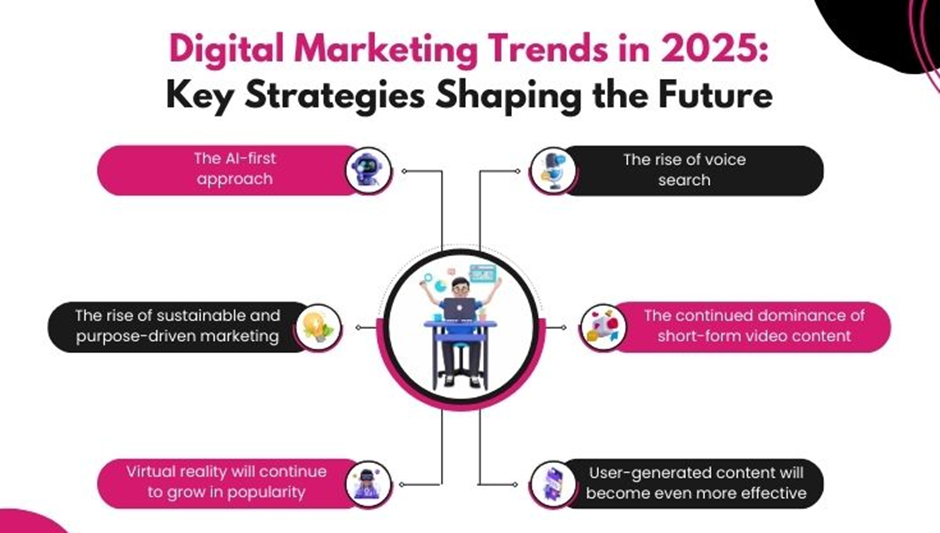
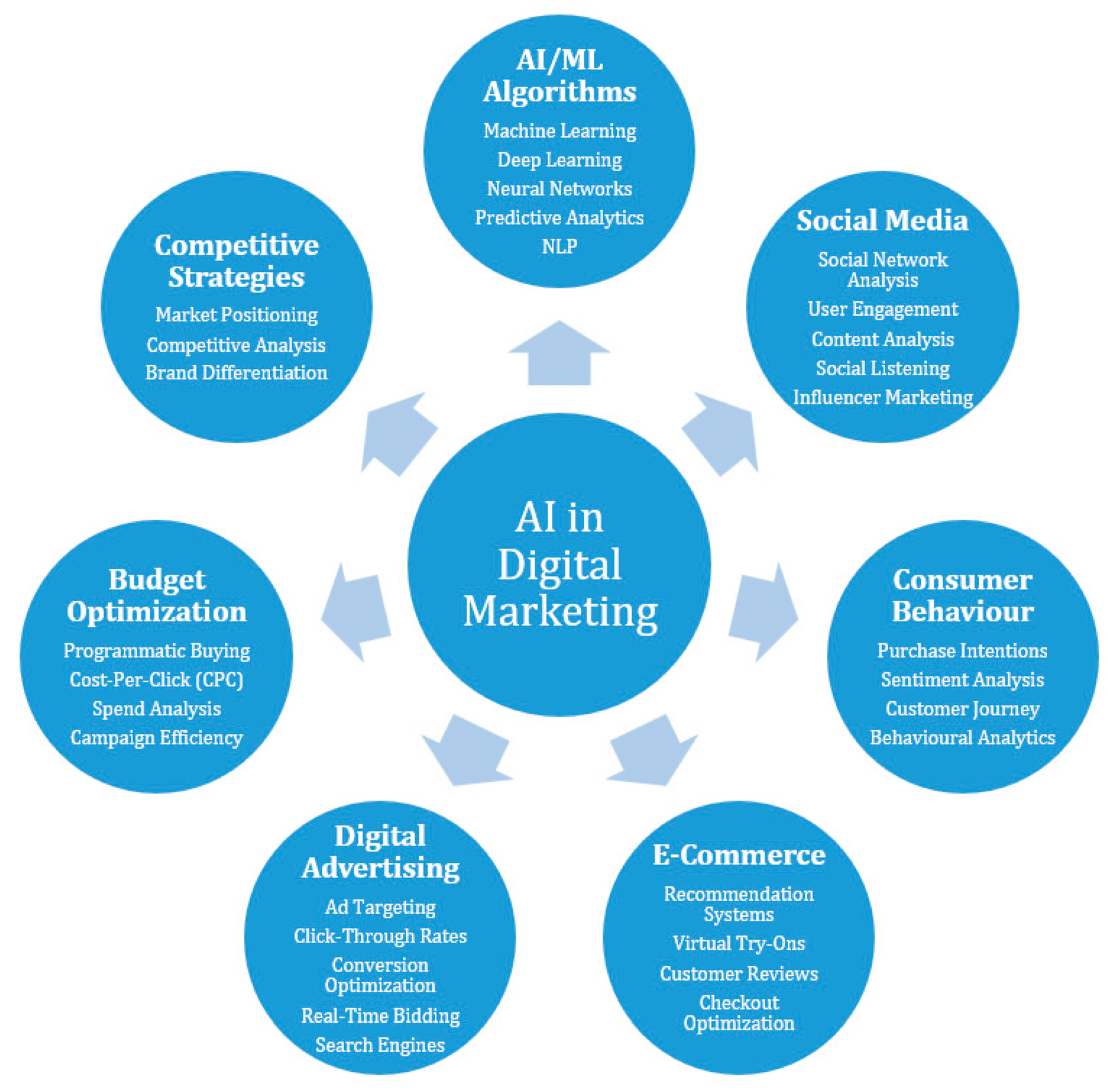
AI is no longer a futuristic concept—it’s the engine driving modern digital marketing. From automated content creation to predictive analytics and AI-driven customer segmentation, brands are using artificial intelligence to optimize efficiency and boost ROI.
According to a recent report by Gartner, 78% of CMOs in 2025 are actively deploying AI tools to support campaign optimization, ad targeting, chatbots, and customer service automation.
“AI is helping marketers move from reactive to predictive strategies,” says Anjali Mehta, Digital Strategy Head at NeoPulse Agency. “With tools like ChatGPT, Jasper, and Adobe Sensei, brands can now create thousands of ad variants, test them in real-time, and deploy what works instantly.”
Even email marketing—long considered old-fashioned—is getting an AI facelift. Tools now generate personalized subject lines, predict open rates, and suggest optimal send times based on user behavior.
Data Privacy: Stricter Regulations, Smarter Strategies
While AI opens doors for smarter targeting, it also raises red flags about data privacy. In 2025, new data privacy laws across the EU, U.S., and Asia-Pacific have made zero-party and first-party data the currency of digital engagement.
With the death of third-party cookies in Chrome officially rolled out this year, marketers have had to rebuild their data infrastructure. Brands now encourage users to voluntarily share data through value-driven interactions like surveys, polls, and loyalty programs.
“Trust is now the ultimate brand currency,” says Marco Tan, Chief Privacy Officer at Veridata Solutions. “Brands that are transparent about how they collect and use consumer data are earning loyalty that even discounts can’t buy.”
Companies like Apple and Google are doubling down on privacy-first policies, requiring app developers and advertisers to be crystal clear about tracking mechanisms. As a result, privacy-compliant personalization is emerging as a key differentiator.
The Rise of Hyper-Personalization
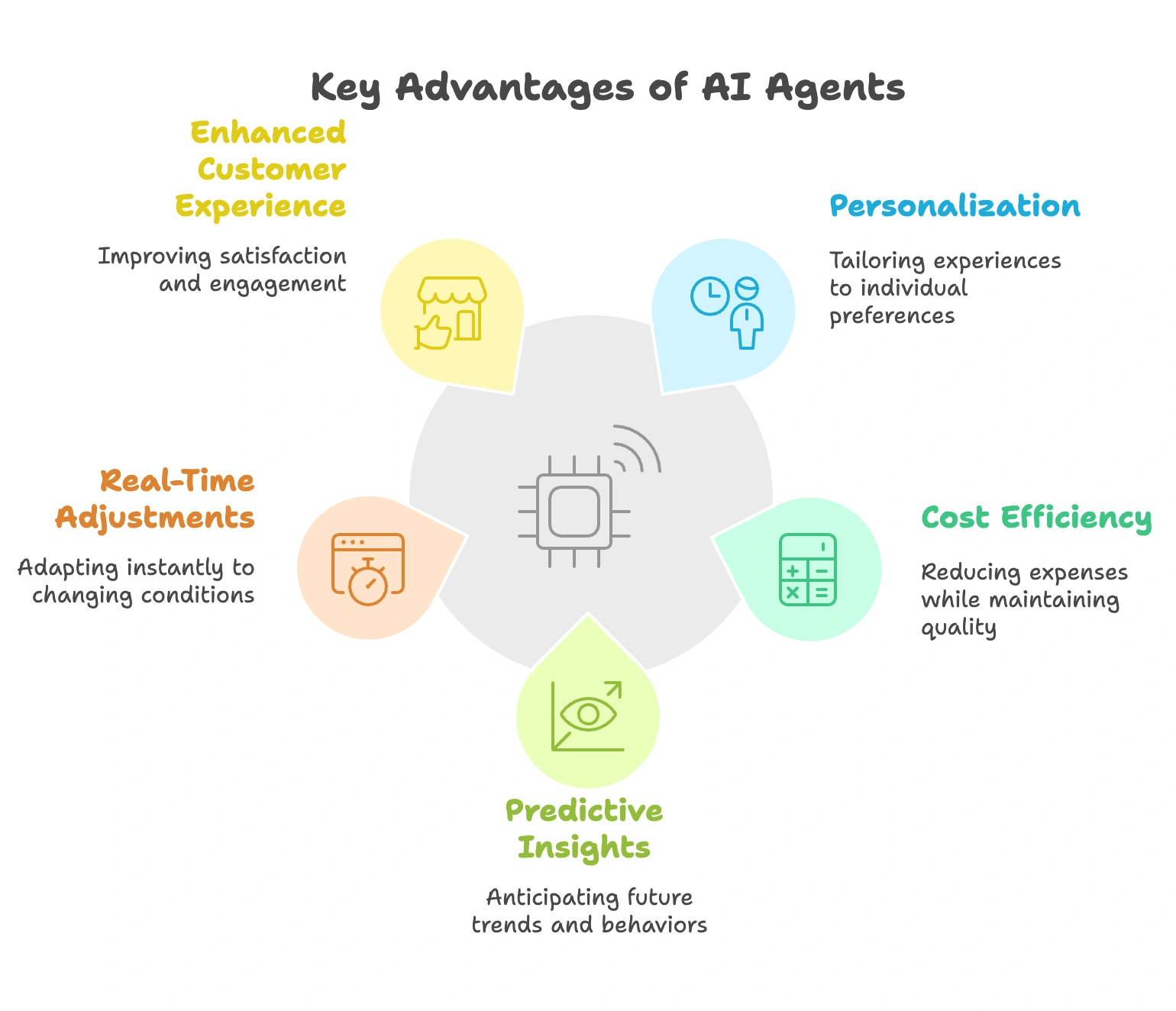
 In 2025, personalization is no longer just using a customer’s name in an email. It’s about real-time content customization based on behavior, location, device, and even emotion.
Retail giants like Amazon and Nike are using machine learning to create individualized shopping experiences, recommending products based on browsing history, social activity, and predictive purchase intent.
Even small businesses are catching up, thanks to affordable tools like HubSpot, Zoho, and Klaviyo, which offer advanced automation and behavioral segmentation.
“Consumers expect brands to understand them intuitively,” says Priya Rao, CMO at BeautyBurst India. “If a customer abandons their cart, we don’t just send a reminder—we tailor the message based on their product interest, time of visit, and previous purchases.”
Hyper-personalization is also powering content marketing. Streaming services, for example, now use AI to dynamically adjust trailers, thumbnails, and even the sequence of scenes depending on the viewer’s profile.
Short-Form Video Dominance: TikTok, Reels, and Beyond
In 2025, short-form video content is the most engaging format across all demographics. TikTok, Instagram Reels, and YouTube Shorts continue to dominate digital attention spans, with users spending an average of 3.5 hours per day on video content.
Brands are increasingly prioritizing video-first strategies, integrating storytelling, humor, and user-generated content. In fact, 74% of marketers say that short-form videos deliver the highest ROI among content types.
This trend has given rise to the “creator economy,” where micro and nano influencers play a significant role in content distribution. Unlike traditional influencers with millions of followers, smaller creators offer higher engagement and authenticity.
Moreover, livestream shopping—a phenomenon that began in Asia—has made its way into Western markets. Platforms like Amazon Live and TikTok Shop allow brands to host interactive product demonstrations, combining entertainment and commerce in real time.
 Voice Search, AR, and the Multimodal Web
With the growing integration of smart devices, voice search is becoming a mainstream behavior. Optimizing for voice queries and conversational search is now essential, especially for local businesses and service-based industries.
Additionally, augmented reality (AR) is making waves in e-commerce. From virtual try-ons to immersive brand experiences, AR is bridging the gap between online browsing and in-store shopping.
Companies like IKEA and Lenskart are allowing customers to see products in their space or on their face before making a purchase. The use of 3D modeling and AR ads is expected to grow 45% this year alone.
The web is evolving toward multimodal interaction, where users engage through text, image, voice, and gesture. Search engines like Google and Bing are rolling out multisource features, allowing users to combine voice, image, and text in one query.
SEO & Content in the Age of Generative AI
Search engine optimization (SEO) is undergoing a radical transformation in the era of generative AI. With tools like ChatGPT and Gemini integrated into search engines, users now receive AI-generated answers instead of just links.
This forces content marketers to focus on authority, clarity, and originality. Google’s latest Search Quality Guidelines prioritize “helpful content” and human-first narratives, penalizing spammy AI-generated text.
“We’re seeing a shift from keyword stuffing to ‘answer-first’ content,” explains Neil Matthews, SEO Director at RankRise. “Websites that deliver clear, structured, and trustworthy information will win the new AI-powered SERP.”
Video SEO and voice optimization are also becoming critical, especially with Google indexing podcasts and voice responses.
 Marketing Automation & Omnichannel Integration
Marketers in 2025 rely heavily on automation tools to orchestrate complex campaigns across email, web, SMS, social, and mobile apps. Platforms like Salesforce, Mailchimp, and Active Campaign allow businesses to create omnichannel journeys that adapt to customer behavior in real time.
For example, if a customer clicks on an Instagram ad, views a product, and then abandons their cart, the system might trigger a WhatsApp reminder, followed by a personalized discount email, and a retargeted Google ad—all coordinated automatically.
Such journey orchestration is reducing customer acquisition costs and improving lifetime value.
The Road Ahead
The digital marketing revolution in 2025 is driven by a powerful mix of data, creativity, and technology. Brands that succeed are those that respect privacy, embrace personalization, and innovate with authenticity.
The challenge lies not in choosing the trend of the day, but in creating cohesive, meaningful experiences across platforms and devices. As AI reshapes content creation and consumer behavior evolves rapidly, marketers must stay nimble, ethical, and customer-obsessed.
One thing is clear—digital marketing is no longer a department, it’s the backbone of business strategy.